
When it Comes to Microchips: Does Size Matter?
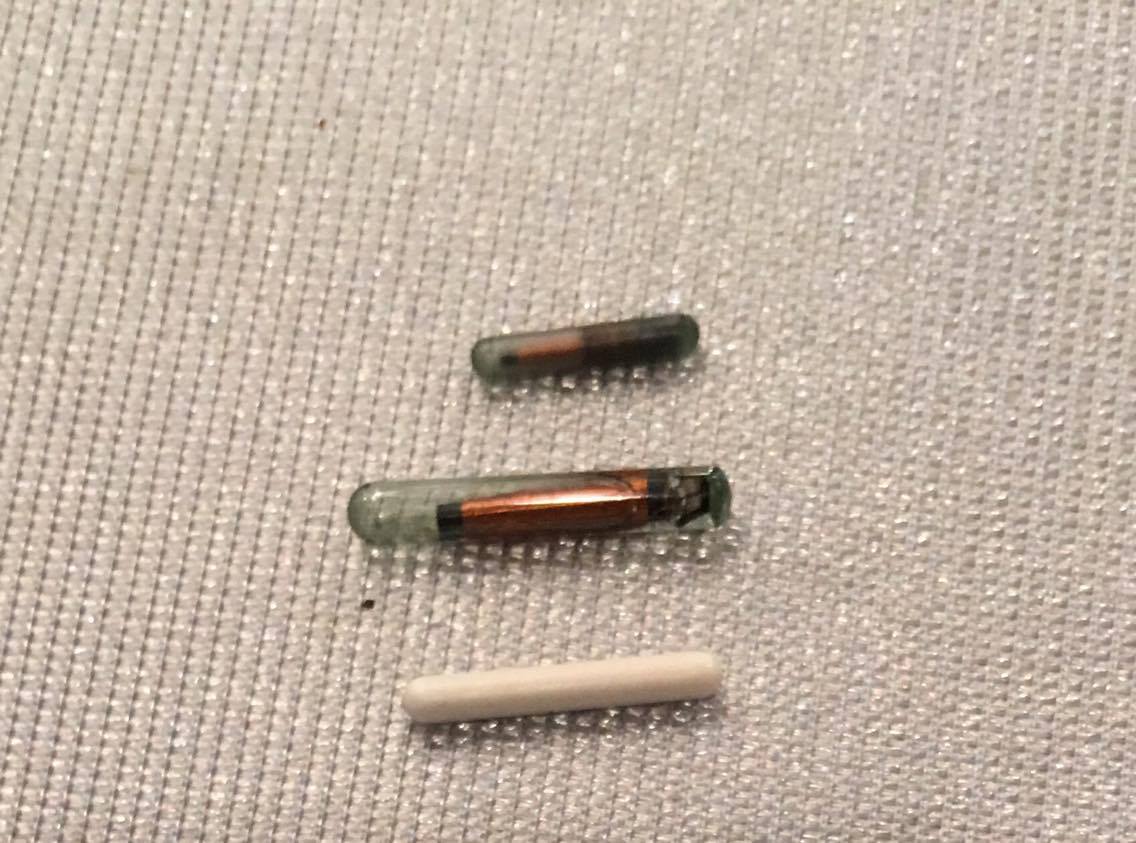
Are smaller microchips better? Not necessarily. There has been a trend towards very small microchips in the animal sheltering and veterinary world. Smaller microchips can be easier to insert for very small dogs, puppies and kittens. The drawback? “Mini” microchips have a shorter copper antenna. The size of the microchip antenna impacts the read distance for the chip. A smaller antenna means a shorter read distance so the chip is harder to find.
In the picture above you can see the amount of copper in a standard microchip (the middle microchip) and a mini-chip (the top microchip). The copper acts as the antenna. More antenna means a better liklihood that the microchip will be easily detected. The bottom microchip in the photo is a thinner slightly smaller chip that inserts easily but has a similar amount of copper as the regular microchip. The slimmer profile and polymer make it easier to insert and is a fraction of the weight of glass chips yet does not compromise read distance.
An educated consumer is a wise consumer. Make sure that you understand that a mini-chip may be more easily missed when being scanned. It is not a wise choice for larger pets, thick furred cats, or for young pets who may grow and develop into a heavily-muscled or long-haired breed.
The Slim Chip is a good alternative for those people who feel that insertion of the regular sized microchip may be painful for their pet or simply prefer a smaller gauge needle.
Regardless of microchip type, every vet clinic and shelter employee should be using Best Microchip Scanning Practices when they scan an animal for a microchip. We also ask that vet clinics make it a regular part of a pet’s annual exam to do a microchip scan, following the procedure at Pharr Road Animal Hospital. All new patients should also be scanned, in case they are actually someone else’s lost pet.
Likewise, we ask that animal shelters scan every incoming animal (including owner surrenders) at least twice (even consider multiple scanners as NO scanner is 100% reliable) The last known owner of the animal be contacted to make sure he is aware that the pet is there. Animals should be scanned again before adoption, transfer or euthanasia. These simple procedures could result in the reunions of hundreds of missing microchipped dogs and cats.


